If you are sourcing windows for a residential or commercial project in North America, you have probably seen the NFRC label. But what does it actually tell you? Unlike a simple “energy-efficient” claim, NFRC certification provides standardized, third-verified data on how a window performs thermally. This article explains why NFRC matters, what the numbers mean, and how using certified products can protect your project budget and reputation.
What Is NFRC?
The National Fenestration Rating Council (NFRC) is a non-profit organization that establishes uniform methods for testing and rating the energy performance of windows, doors, and skylights. NFRC does not pass or fail products. Instead, it provides certified ratings that allow buyers to compare different products fairly.
NFRC certification involves testing (physical or computer simulation) in an accredited laboratory, following strict procedures defined in NFRC documents such as 100, 200, and 500. The result is a label showing key metrics like U-factor, Solar Heat Gain Coefficient (SHGC), Visible Transmittance (VT), and sometimes Condensation Resistance.
For projects in the United States and Canada, NFRC ratings are often required by energy codes (e.g., IECC, ASHRAE 90.1) or green building programs (LEED, ENERGY STAR). Without an NFRC label, your windows may not pass inspection or qualify for incentives.
What the NFRC Label Tells You
An NFRC label typically displays three to four numbers. Here is what each one means for your building.
U-Factor – Measures how well the window insulates. Lower U-factor means better insulation. For cold climates, look for U-factor ≤ 0.30. For warm climates, slightly higher may be acceptable. This number directly affects heating and cooling costs.
Solar Heat Gain Coefficient (SHGC) – Measures how much solar radiation passes through the window. Lower SHGC reduces heat gain in summer; higher SHGC can help with passive solar heating in winter. The right choice depends on your climate and orientation.
Visible Transmittance (VT) – Measures how much natural light comes through. Higher VT means brighter interiors. There is often a trade-off with SHGC, so selecting a balanced rating is key.
Condensation Resistance (optional) – Predicts how likely moisture is to form on the interior surface. Higher resistance means lower risk of condensation and mold.
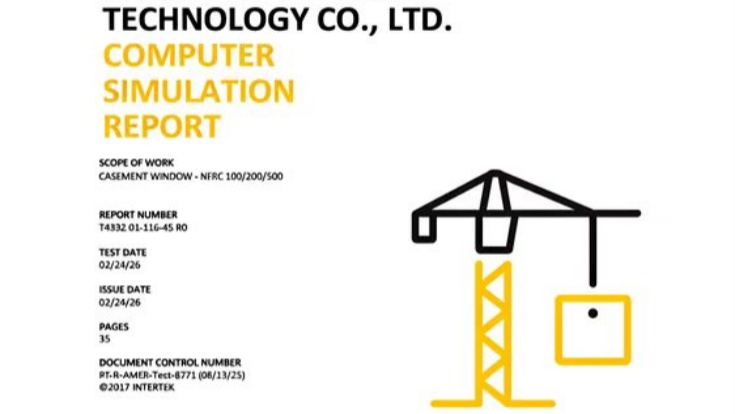
When you see an NFRC certificate or test report – such as the Intertek computer simulation report shown on this page – you can trust that these numbers have been generated under standardized conditions, not just marketing claims.
How NFRC Certification Protects Your Project
For developers, contractors, and architects, specifying NFRC-certified windows brings several practical benefits.
Code compliance – Most North American energy codes require windows to meet specific U-factor and SHGC targets. An NFRC label is the accepted proof. Without it, you may face delays, rejections, or the need for costly alternative compliance paths.
Fair product comparison – Because all NFRC ratings use the same test methods, you can compare windows from different suppliers side by side. This prevents a supplier from exaggerating performance with “internal tests” or vague claims.
Energy savings for end users – Accurate ratings translate into predictable energy bills. For residential projects, this is a strong selling point. For commercial buildings, it contributes to long-term operating cost reduction.
Liability protection – If a window fails to perform as promised, an NFRC certificate provides a clear benchmark. Contractors and developers can point to the certified rating as the agreed standard, avoiding disputes over subjective expectations.
Computer Simulation vs. Physical Testing
NFRC allows two methods: physical testing of a representative specimen, or computer simulation using approved software (e.g., THERM, WINDOW). The report you see here is a computer simulation report issued by Intertek, an accredited laboratory.
Computer simulation is often faster and more cost-effective, especially for product families with similar profiles. However, it must be based on validated input data. Both methods produce equally valid NFRC ratings when performed by an accredited lab.
When reviewing a certificate, check that it references the correct NFRC standards (100, 200, 500) and includes a unique report number, issue date, and laboratory identification. The example report clearly shows “SCOPE OF WORK: CASEMENT WINDOW – NFRC 100/200/500” and a report number – exactly what you should look for.
What to Watch Out For
Not every window sold as “energy efficient” carries an NFRC label. Some suppliers may provide test reports from non-accredited labs or use different standards (e.g., EN or Australian). These are not interchangeable. If your project is in North America, insist on NFRC.
Also, be aware that NFRC ratings are for the complete window system, including frame, glazing, and spacers. A certificate that only rates the glass (e.g., a glass-only SHGC) is incomplete. The full assembly matters.
Finally, check that the certificate matches the exact product model and configuration you intend to buy. Small changes – like switching from double to triple glazing or changing spacer material – will alter the rating.
Why NFRC Gives Your Clients Confidence
For homeowners or commercial tenants, energy efficiency is a top concern. High energy bills or drafty windows lead to complaints and negative reviews. When you install windows with clear NFRC ratings, you can show buyers or tenants exactly what to expect.
In marketing materials, displaying the NFRC label signals transparency and quality. It tells potential buyers: “This product has been tested by an independent lab. The numbers are real.” That trust translates into faster decisions and fewer objections.
For builders, using NFRC-certified windows also helps with warranty claims. If a homeowner claims a window is “leaking heat,” you have a certified baseline to compare against. This protects your reputation and reduces unnecessary callbacks.
Conclusion: Certified Performance, Reliable Results
NFRC certification is not a bureaucratic hurdle. It is a tool that aligns expectations between manufacturers, specifiers, and end users. By choosing windows with valid NFRC ratings, you gain code compliance, fair comparability, and documented energy performance.
The next time you evaluate a window supplier, ask for the NFRC certificate. Look for the report number, the test standard, and the accredited lab. A supplier that readily provides these documents is one that stands behind its product – and that makes your project safer, greener, and more profitable.