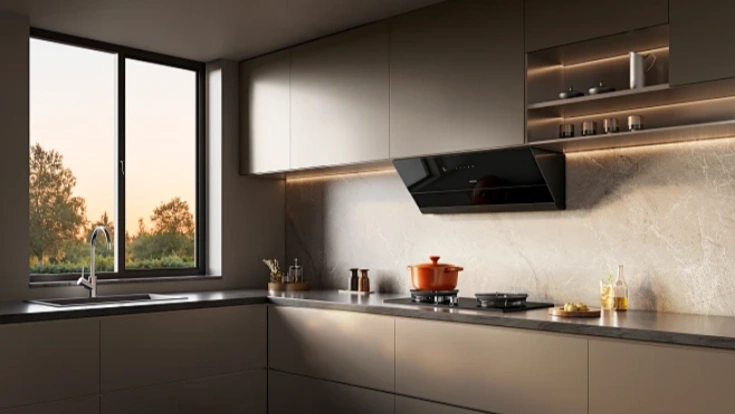
Kitchens are tricky for windows. Range hoods, cabinets, and appliances take up most of the wall space. What remains is often too small for a standard window, or awkwardly placed behind a sink or counter. And yet, kitchens need windows more than most rooms — to let out smoke, steam, and cooking smells, to bring in fresh air, and to make a hardworking space feel pleasant.
The key is choosing the right type, placing it where it fits, and using smart operation where reach is a problem.
Casement windows lead the way
For most kitchens, casement windows are the strongest choice. They crank outward, so you don‘t have to lean over a counter and push up a heavy sash. The handle is easy to reach, even behind a sink. Casement windows also offer a tall, narrow shape that fits neatly between cabinets or above counters. They seal tightly when closed, which helps with energy efficiency. And they come in a range of styles that can suit both traditional and modern kitchens.
If you have a larger opening, a row of three casements can give you ventilation on the sides while keeping a clear view through the center. Another option is a casement paired with a fixed picture window — the fixed section frames the view, and the operable part lets in air when needed.
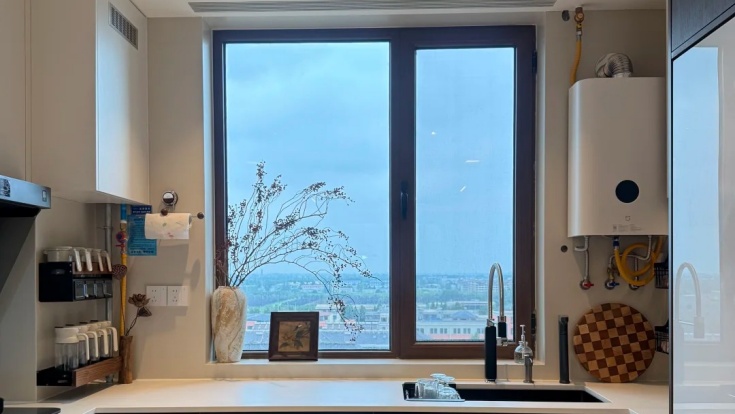
Smart safety: fume and gas detection
What sets a smart kitchen window apart from a regular one is its ability to look after your home when you‘re not paying attention. ALWEW’s smart windows can be equipped with sensors that detect cooking fumes and gas leaks.
When the sensor picks up smoke or grease-laden vapors from cooking, the window can open automatically to clear the air. This is especially useful when you‘re busy at the stove and don’t have a free hand to open a window.
More importantly, if the system detects a gas leak, it doesn‘t just sit there. The window opens automatically to let fresh air in and reduce the risk of gas buildup. At the same time, an alarm sounds and an alert is sent to your phone. This gives you peace of mind whether you’re in the next room or away from home.
These sensors can be integrated into casement or awning windows, and they work alongside the usual smart controls — voice, app, remote, or wall switch. You don‘t have to remember to open a window when you start cooking. The window does it for you.
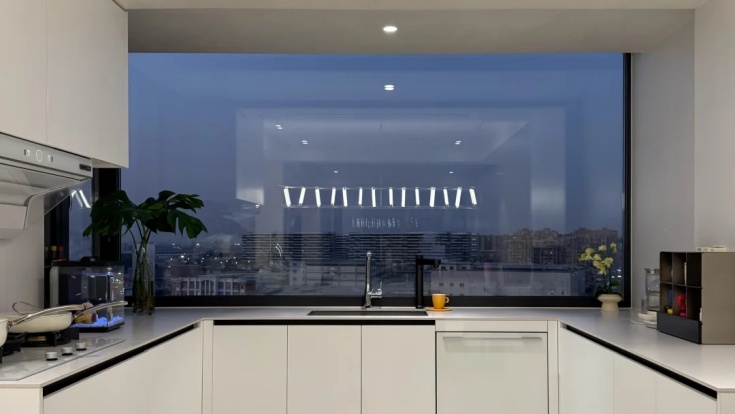
Over the sink: smart operation makes a difference
The window above the kitchen sink is often the most used one. You stand there washing dishes, looking out, and occasionally opening it for fresh air. But if you have to reach over a deep sink and stretch to push a window up or turn a crank, it can become a nuisance. This is where ALWEW’s smart electric opening can help. You can operate that window by a wall switch, a small remote, or even a voice command — no leaning, no stretching. This is especially useful for windows that are slightly out of reach or placed behind a tall faucet.
For a sink window, avoid a single casement that opens in the middle with a central mull post blocking your view. Instead, consider three narrower casements — one on each side and a fixed panel in the middle for an unobstructed view. Or choose a larger casement offset to one side. Another option is an awning window (hinged at the top) that opens outward from the bottom, which can be placed higher on the wall and still provide airflow.
New construction: plan windows around the layout
If you are building a new kitchen, you have more freedom to place windows where they make the most sense.
Pass-through windows between the kitchen and a patio or outdoor living area are popular for entertaining. You can pass food and drinks directly outside without walking around. These can slide open like a patio door, fold accordion-style, or disappear into a wall pocket. Some can even be motorized.
Clerestory windows high up along the roofline bring in daylight all day without sacrificing wall space for cabinets. They are out of reach, but ALWEW offers electric operators for awning or casement windows, so you can open them with a switch when you need extra ventilation.
Windows as a backsplash is a more contemporary idea. Instead of tiles, use a continuous band of awning or fixed windows set flush with the countertop and below the upper cabinets. This brings light directly onto your work surface, making food prep easier on the eyes.
Remodel: work with what you have
In a kitchen remodel, you are often working within existing walls. But there are still ways to add light.
Replace an upper cabinet with a window – a vertical casement can fit in the same space. If you are doing a full renovation, you can remove an entire bank of upper cabinets and install a row of windows along the wall instead. This is a dramatic change that transforms a dark kitchen into a bright one.
Corner windows in a breakfast nook – if your kitchen has a dining area, windows on two adjacent walls bring in light from multiple directions. You can achieve this by installing separate windows on each wall, or with a custom corner unit.
Garden windows – a small box-like window that projects outward, with glass on the top and sides. It acts like a mini greenhouse for herbs. The side windows can often be opened for ventilation. It adds both function and charm.
For any of these remodel options, choose thermally broken aluminum frames — slim, durable, and available in finishes that match your cabinetry. And if you have a casement or awning window that is hard to reach, add a motorized operator to make it practical.